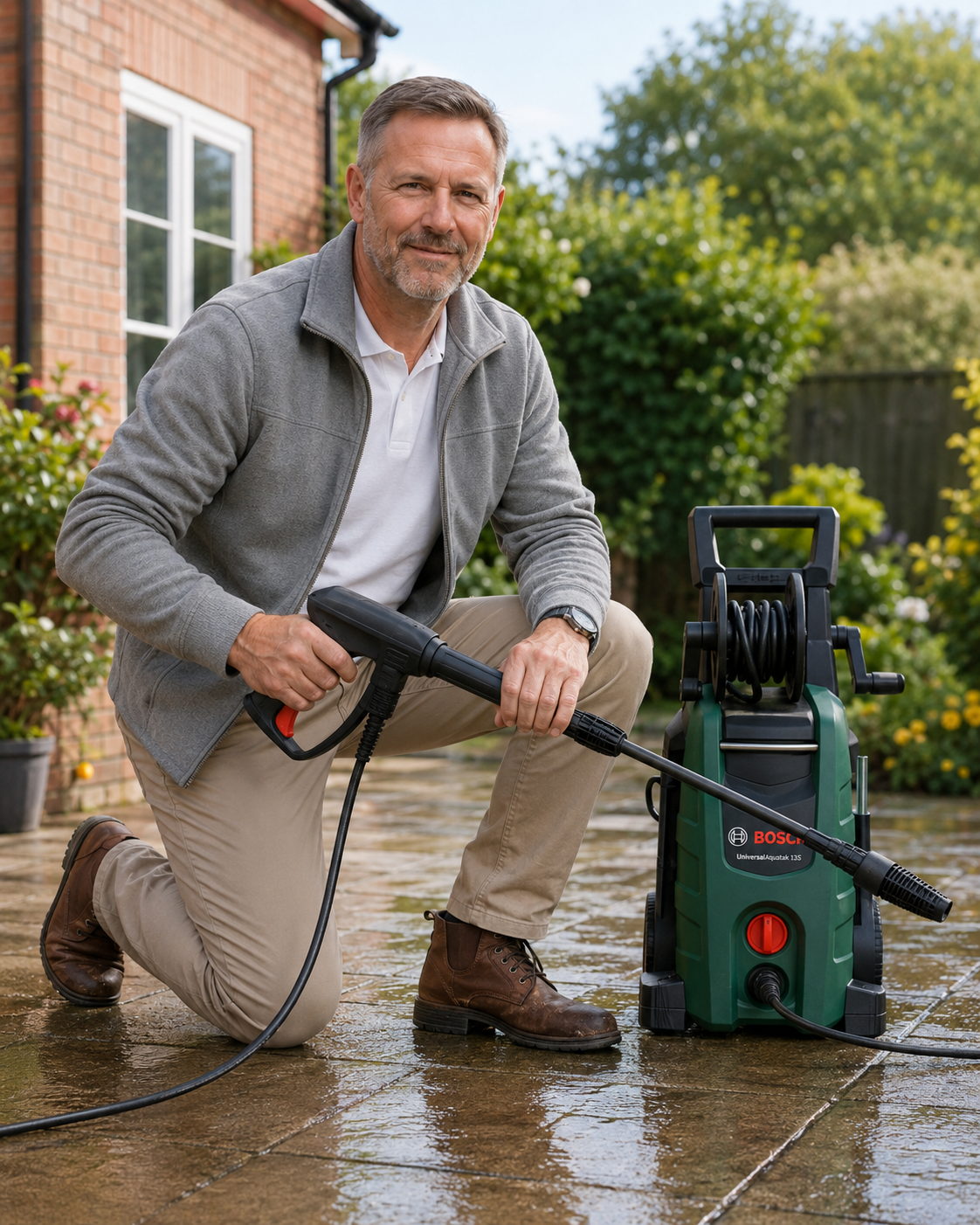
Pressure Washers
Find practical pressure washer recommendations for real cleaning jobs around the home. We compare electric, petrol and cordless models by cleaning performance, pressure control, accessories, ease of use and value for UK homeowners.
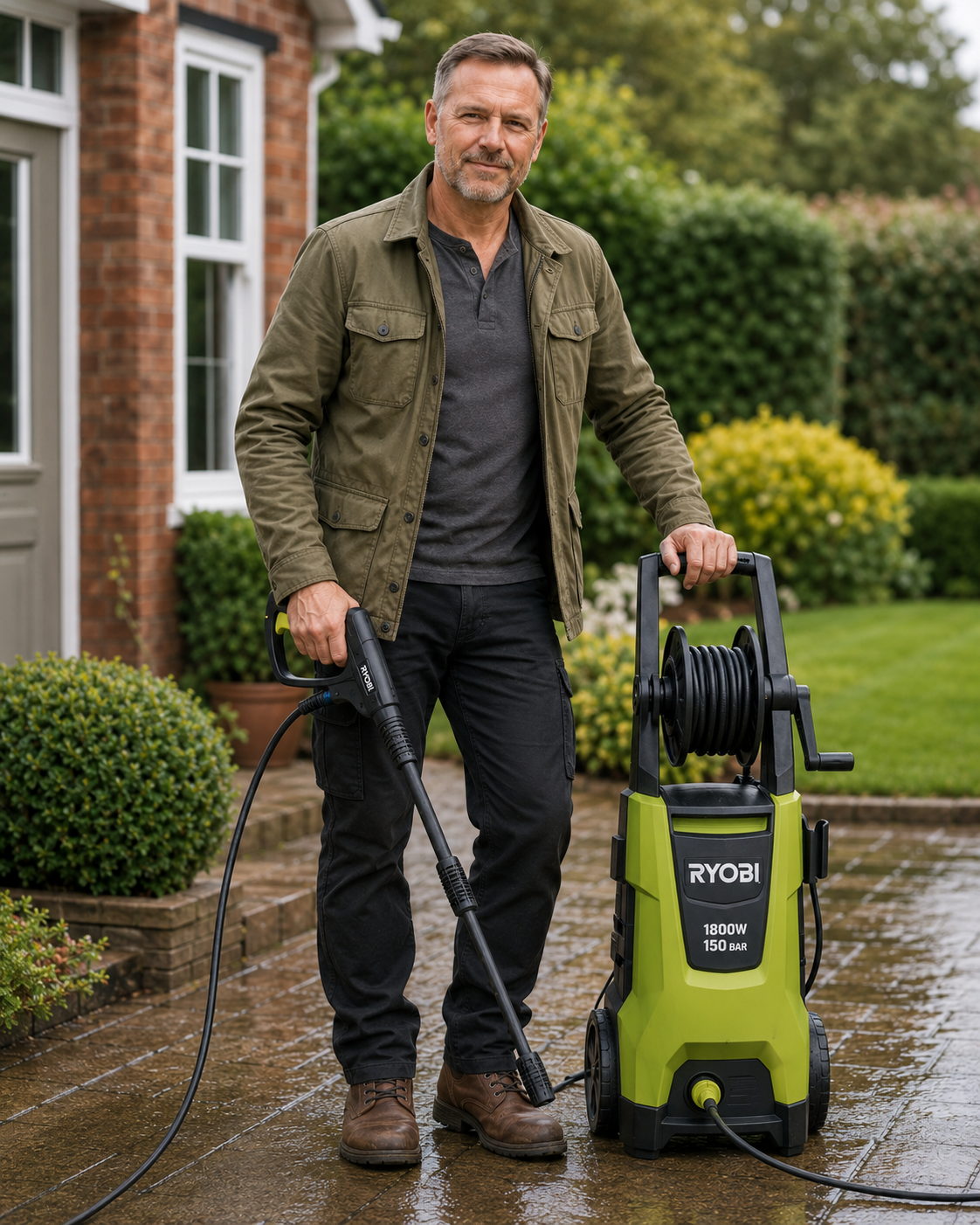
Choose the right type of pressure washer
The best pressure washer depends on power source, cleaning area, portability and how much maintenance you want. Start with the core washer types below, then move into brands, accessories, surfaces and real cleaning tasks.
Quick chooser
-
01
Electric Best for regular home use, patios, cars and decking.
-
02
Petrol Better when you need more freedom, more power and no plug socket nearby.
-
03
Cordless Good for quick rinsing, bikes, small jobs and portability.
-
04
Industrial / Hot Water For heavy-duty cleaning, grease, oil and demanding surfaces.
Electric Pressure Washers
The most practical choice for regular home cleaning, car washing, patios, decking and garden furniture.
Petrol Pressure Washers
More independent and more powerful, useful for larger outdoor areas where plug-in electric models are limiting.
Cordless Pressure Washers
Portable and convenient for light cleaning jobs, quick rinsing and places where mains power is awkward.
Industrial Pressure Washers
Built for demanding cleaning, repeated use, heavier surfaces and professional or semi-professional tasks.
Hot Water Pressure Washers
Specialist machines for grease, oil, farm equipment and professional cleaning where heat improves results.
Choose by pressure washer budget
Price matters, but the cheapest washer is not always the best value. Use these guides to compare pressure washers by budget and match the machine to the cleaning jobs you actually need.
- POWERMore useful pressure and better flow for larger areas.
- HOSELonger hoses, better reels and easier movement around the garden.
- KITBetter nozzles, patio cleaners, detergent options and accessories.
- BUILDStronger pumps, better wheels, handles and long-term usability.
Under £100
Compact and affordable pressure washers for light cleaning, small patios, cars and occasional use.
Under £200
A strong range for practical home cleaning, with better accessories and more capable electric washers.
Under £250
Better power, better hose management and more useful kits for homeowners who clean more often.
Under £300
More serious home pressure washers for larger cleaning areas, frequent use and better overall performance.
Under £500
Higher-end home and semi-professional models for tougher surfaces, stronger build quality and more demanding work.
Choose by pressure washer brand
Pressure washer brands differ in build quality, accessories, hose systems, repair support and the type of user they suit best. Use these brand guides to compare popular options before choosing a model.
What matters more than the logo?
The same brand can have excellent models and weak models. Before choosing, compare how the washer handles your real cleaning work: car washing, patios, decking, driveways, bikes, garden furniture or heavier outdoor dirt.
Karcher
Popular UK home choice with a wide accessory ecosystem for cars, patios and outdoor cleaning.
Bosch
Practical electric pressure washers for compact storage, cars, patios and routine cleaning.
Worx
Worth comparing when portability, compact storage and quick cleaning matter most.
Nilfisk
Capable home pressure washers for patios, vehicles and balanced outdoor cleaning performance.
Ryobi
Useful for portable cleaning, cordless buyers, bikes, cars and smaller outdoor jobs.
Choose by real cleaning task
Different vehicles and outdoor jobs need different pressure, flow, detergent setup and spray control. Start with the most common cleaning scenarios, then move into specialist guides for farms, boats, commercial use and beginner-friendly washers.
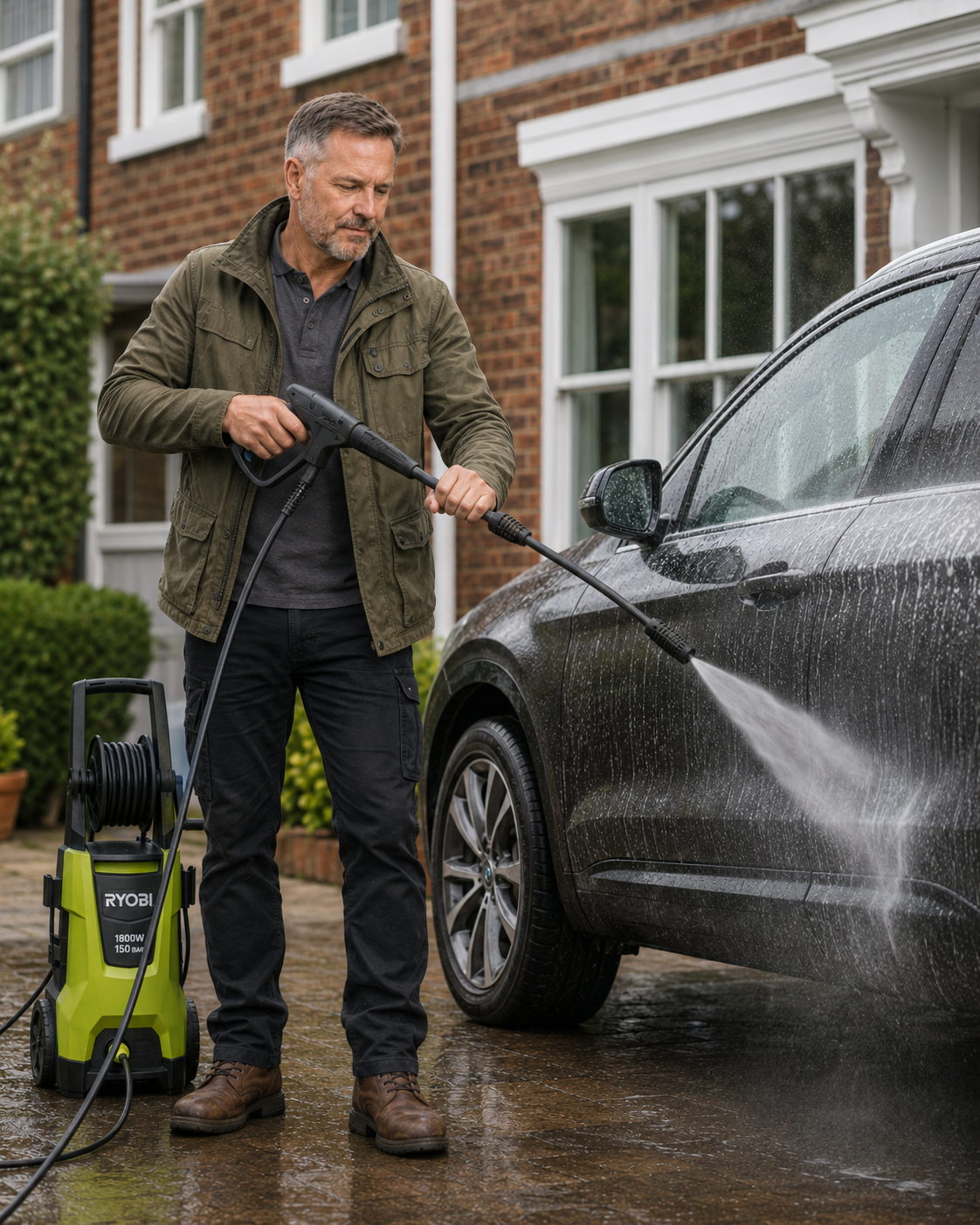
Cars
Pressure washer advice for safe car cleaning, foam pre-wash, wheels, lower panels and paint-friendly pressure control.
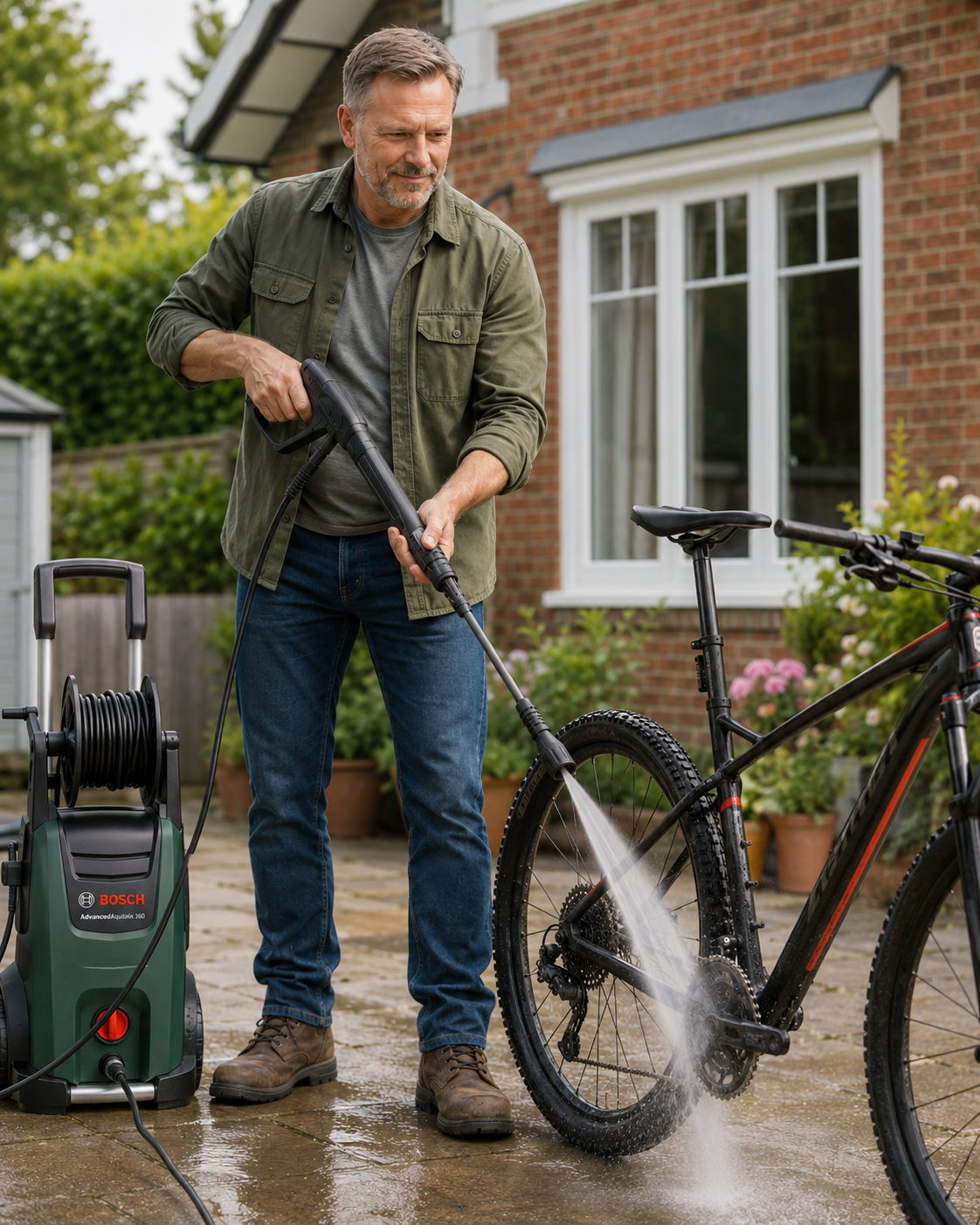
Bikes
Useful picks for bicycle cleaning, quick rinsing, delicate parts, frames, tyres and controlled low-pressure washing.
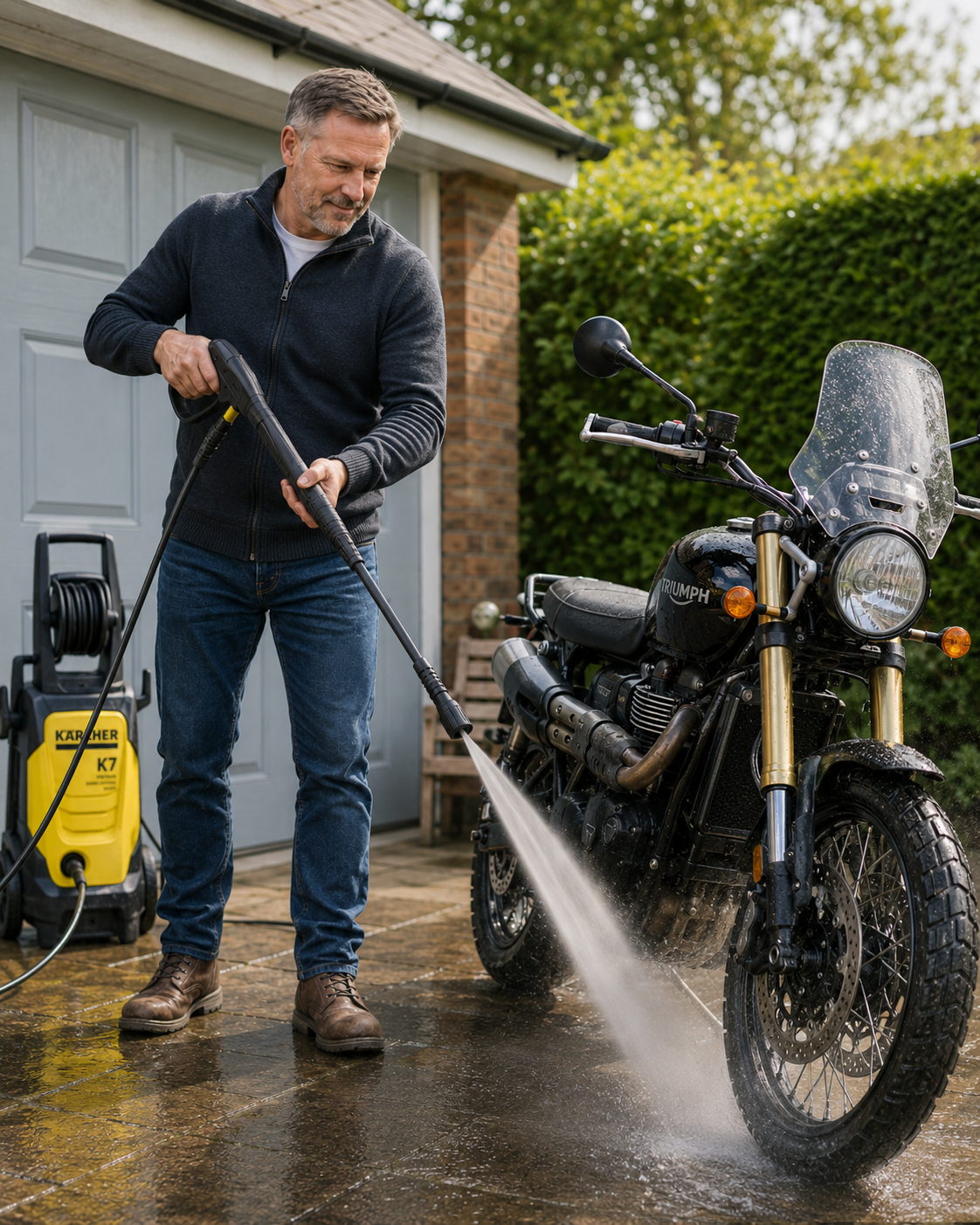
Motorcycles
Motorcycle-focused guidance for road grime, wheels, fairings, engine areas and safer cleaning around sensitive parts.
More pressure washer use cases
Use these guides when the cleaning job is more specific: farm equipment, commercial use, boats, construction sites, lightweight machines or beginner-friendly washers.
Mountain Bikes
For mud, tyres, frames and drivetrain areas where control matters more than brute force.
Tesla Owners
Car washing advice for EV owners who want careful foam, rinse and paint-safe cleaning.
Semi Trucks
Higher-workload machines for large vehicles, road film, wheels, chassis areas and longer cleaning sessions.
Tractors
Pressure washer picks for mud, farm grime, tyres, implements and larger agricultural cleaning jobs.
Vehicles
A broader guide for vans, cars, outdoor vehicles and general vehicle washing at home.
Boats
For hulls, decks, outdoor storage grime and cleaning setups near variable water sources.
Commercial Use
More durable machines for heavier workloads, larger cleaning areas and repeated use.
Construction
For site dirt, concrete dust, tools, equipment, vehicles and tough outdoor cleanup.
Small Businesses
Pressure washers for part-time commercial cleaning, workshops, yards and small service businesses.
Farm Equipment
For caked mud, machinery, trailers, tools and regular heavy-duty outdoor cleaning.
Lightweight / Easy to Use
Simple, portable washers for users who want easy setup, light storage and quick cleaning.
Beginners
Starter-friendly pressure washers for first-time buyers who want simple, practical home cleaning.
Use the right pressure, nozzle and method
A pressure washer is only useful when the setup matches the surface. Cars, bikes, timber, patios, concrete and house exteriors all need different pressure habits. This section helps readers choose safer settings before they start cleaning.
Before you start cleaning
Choose by surface type
Different surfaces need different pressure, flow and nozzle control. Use this compact directory to find the right guide for concrete, patios, stone, decking, furniture, roof tiles and other outdoor surfaces.
Hard surfaces
For strong outdoor surfaces, driveways, paving and large cleaning areas.
Paving & stone
For stone, blocks, slabs, tiles and surfaces where control matters.
Patios & garden
For common UK outdoor living areas, furniture and seasonal garden cleaning.
Wood & roof areas
For more delicate surfaces where too much pressure can cause damage.
Choose by area and property type
Some cleaning jobs are not about one surface only. Large patios, driveways, roofs, gutters, home exteriors and full-house cleaning need the right mix of reach, water flow, pressure control and accessories.
Large outdoor areas
For bigger surfaces where reach, flow rate and cleaning speed matter.
Home exterior cleaning
For walls, cladding, siding, decks and full outside home maintenance.
Roofs and upper areas
For awkward cleaning jobs where controlled pressure and safer access are essential.
Special property areas
For places where space, drainage, overspray or surface sensitivity changes the setup.
Choose by task and setup
Some pressure washer jobs depend less on the surface and more on the setup: water supply, detergent, nozzle choice, cleaning distance, access and the type of dirt you need to remove.
Pressure & water setup
For unusual water supply conditions, lower tap pressure and portable cleaning setups.
Tough removal jobs
For jobs where the dirt is stubborn, sticky, oily or difficult to shift with a basic rinse.
Prep and restoration
For preparing surfaces before work, cleaning timber carefully and removing old coatings.
Detail cleaning
For jobs where pressure control, spray pattern and accuracy matter more than brute force.
How Alfred chooses a pressure washer worth buying
The best pressure washer is not always the most powerful model. A good recommendation has to balance cleaning performance, hose reach, accessories, build quality, storage, price and how often the machine will actually be used around a UK home.
Practical tests over spec-sheet numbers
Pressure ratings are useful, but they do not tell the whole story. A washer can have decent bar pressure and still feel frustrating if the hose is short, the gun is awkward, the wheels are weak or the accessories are poor.
Cleaning performance
A good washer should remove normal grime from cars, patios, paving, garden furniture and exterior surfaces without needing unsafe pressure or repeated passes.
Pressure control
More power is useful only when it can be controlled. Wide spray, variable power, good nozzles and sensible distance make cleaning safer and more predictable.
Hose, gun and accessories
A longer hose, better spray gun, foam bottle, patio cleaner or detergent support can make a mid-range washer more useful than a basic high-pressure unit.
Build and storage
Wheels, handle design, cable storage, hose reel quality and overall stability matter if the washer will be moved, stored and used regularly.
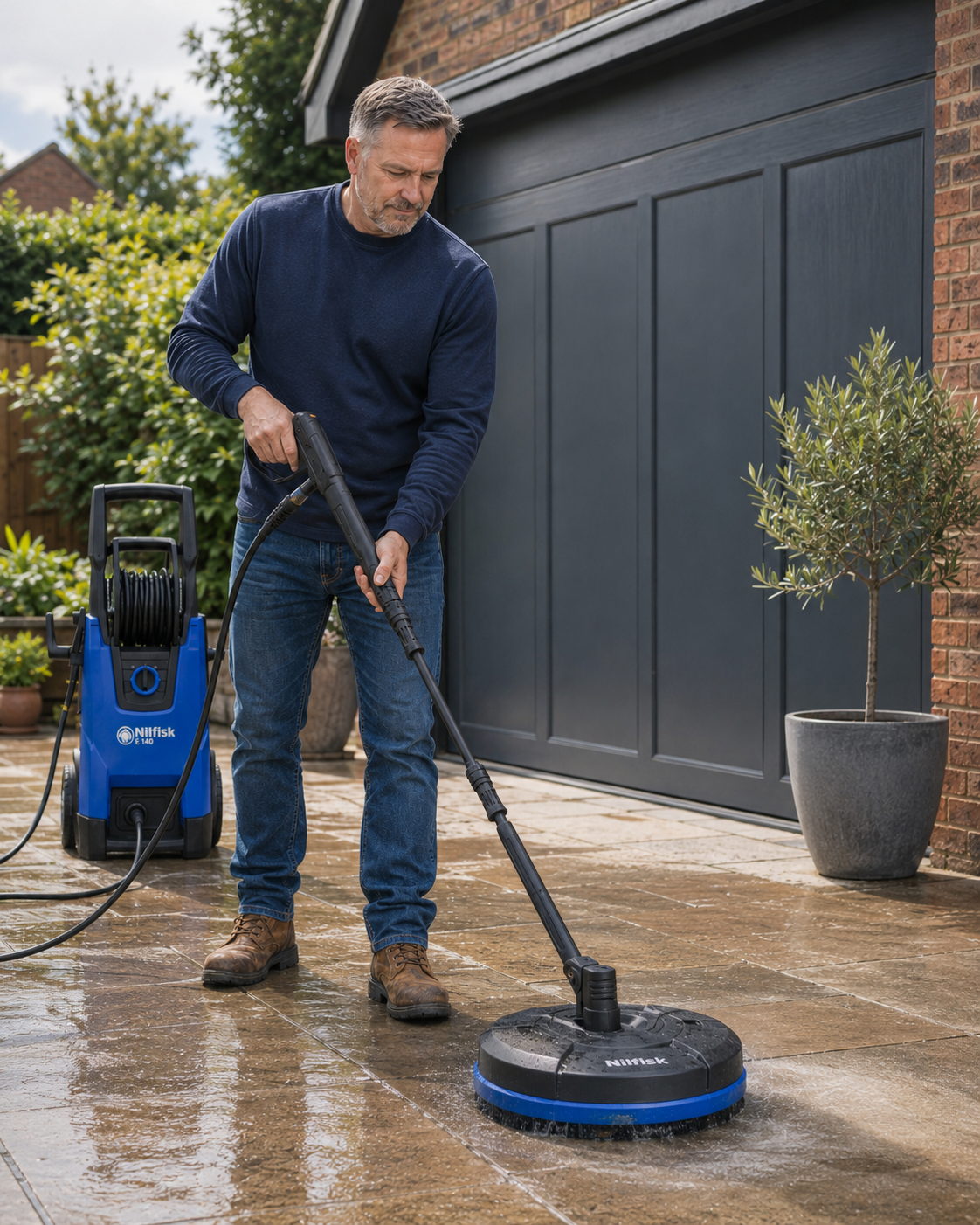
Choose the right pressure washer accessories
Accessories can change how useful a pressure washer feels in real work. A good surface cleaner can make patio cleaning faster, a better hose can stop constant repositioning, and the right detergent or shampoo can reduce the amount of pressure needed on delicate surfaces.
Accessories are not extras
For many home users, the right accessory is what turns a basic washer into a practical cleaning setup. Cars need foam and safe rinse control. Patios need even coverage. High areas need reach. Long jobs need comfort and hose management.
Detergents
Pressure washer detergents help loosen grime before rinsing. They are especially useful on patios, decking, stone, garden furniture, cars and oily surfaces where water pressure alone can be either slow or too aggressive.
Hose Pipe
A better pressure washer hose can make the whole setup easier to use. Length, flexibility, kink resistance and connector quality decide how often you need to drag the washer around the car, patio or driveway.
Car Wash Shampoos
Car wash shampoos are for safer vehicle cleaning. Used with a foam lance or detergent bottle, they help lift road film and dirt before contact washing, reducing the need for high pressure close to paintwork.
Spray Guns
The spray gun affects comfort, trigger control and how tiring long cleaning sessions feel. A better gun can improve grip, reduce hand strain, support quick-connect fittings and make nozzle changes easier.
Extension Wands
Extension wands are useful when you need extra reach for house exteriors, upper areas, gutters, roofs, siding or awkward corners. They help keep distance from the spray zone and reduce the need to move ladders constantly.
Turbo Nozzles
Turbo nozzles concentrate cleaning force into a rotating jet. They can be very effective on stubborn grime, concrete and hard surfaces, but they are too aggressive for cars, glass, soft wood and delicate finishes.
Hose Reels
Hose reels improve storage and handling. They help keep the hose tidy, reduce tangles and make setup quicker, especially when cleaning around cars, driveways, garages, patios or multiple sides of a property.
Surface Cleaner
A surface cleaner is one of the most useful accessories for patios, driveways, slabs and large flat areas. It spreads pressure through rotating jets, gives more even coverage and reduces streaking compared with a narrow wand.
Common pressure washer mistakes to avoid
A pressure washer can save hours, but the wrong setup can damage paint, timber, seals, stone, grout or outdoor furniture. Most problems come from using too much pressure, standing too close or choosing the wrong nozzle for the surface.
Clean better with less risk
Better results usually come from preparation and control, not just a stronger washer. Pre-soak grime, use the right cleaner, keep a sensible distance and test first on delicate surfaces.
Using maximum pressure everywhere
High pressure is useful on concrete and tough paving, but it can be too aggressive for cars, timber, roof materials, soft stone and older paint. Start lower, then increase only if needed.
Standing too close to the surface
Distance controls cleaning force. Moving the nozzle too close can leave marks, lift coating, damage seals or cut into soft materials. Begin further away and move closer gradually.
Skipping detergent dwell time
Detergent needs time to loosen grime before rinsing. Spraying it on and washing it off immediately can waste product and make you rely on more pressure than necessary.
Using aggressive nozzles on delicate jobs
Turbo nozzles and narrow jets are not for every surface. They can be effective on hard grime, but risky around vehicles, windows, timber, grout, old paint and outdoor furniture.
Ignoring hose reach and movement
A washer may be powerful enough but still annoying to use if the hose is short, stiff or constantly tangling. For cars, patios and driveways, reach and handling matter a lot.
Forgetting to test a small area first
Every surface reacts differently. A small hidden test area helps avoid visible damage, especially on resin driveways, decking, painted surfaces, natural stone and older materials.
Which pressure washer should you choose?
Start with the job, not the biggest number on the box. A small car-cleaning setup, a patio washer, a heavy driveway machine and a farm-use pressure washer all need different strengths.
Choose an electric pressure washer
Electric models are the most practical choice for regular UK home cleaning. They are easier to store, simpler to use and usually enough for cars, patios, garden furniture, decking and routine driveway cleaning.
- Best for cars, patios and general home jobs.
- Usually quieter and easier to handle than petrol models.
- Works well with foam bottles, patio cleaners and hose reels.
Choose a petrol pressure washer
Petrol washers make sense when you need more power, more independence and more cleaning time away from plug sockets. They are better suited to large outdoor areas, farm equipment, remote work and heavier grime.
- Best for large driveways, farms and heavy-duty outdoor cleaning.
- Useful when mains power is inconvenient or unavailable.
- Needs more storage space, care and safe handling.
Choose a cordless pressure washer
Cordless washers are useful for light jobs where portability matters more than raw pressure. They are good for quick rinsing, bikes, camping gear, small patios, boats and places where a full-size washer is awkward.
- Best for small jobs, bikes and quick outdoor rinses.
- Useful where water access or mains power is limited.
- Not the best choice for large patios or heavy driveway grime.
Choose a commercial-use setup
If you clean often, cover larger areas or use the washer for work, the machine needs stronger build quality, better hose handling, reliable fittings and accessories that can cope with repeated use.
- Best for workshops, yards, farms and service businesses.
- Look for better pumps, fittings, hose reels and storage.
- Choose by workload, not just pressure rating.
Pressure washer questions answered
Before choosing a machine, it helps to understand the basics: electric or petrol, how much bar you need, which accessories matter and when pressure can become too aggressive for the surface.
Quick answers before you buy
These are the questions that usually decide whether someone needs a compact electric washer, a stronger petrol model, a cordless option or simply a better accessory setup.
What is the best pressure washer for home use?
For most homeowners, a good electric pressure washer is the best first choice. It is easier to store, simpler to use and strong enough for cars, patios, garden furniture and routine driveway cleaning.
Is electric or petrol better?
Electric is better for normal home use. Petrol is better for heavier work, larger outdoor areas, farm equipment and places where mains power is inconvenient. Petrol gives more freedom, but needs more care and storage space.
How much bar do I need?
The right bar depends on the surface. Cars and delicate areas need controlled pressure, while concrete and paving can handle more. Start with the bar pressure guide before choosing by numbers alone.
Are pressure washers safe for cars?
Yes, if used correctly. Use a safe nozzle, keep enough distance, avoid damaged paint and do not blast seals, badges or trim. A shampoo or foam step can reduce the need for aggressive pressure.
Which accessory is most useful?
For patios and driveways, a surface cleaner is often the biggest upgrade. For cars, a foam bottle and good shampoo help more. For regular use, a better hose, spray gun and hose reel can make the washer feel much easier to live with.
Are cordless pressure washers worth it?
Cordless pressure washers are worth it for light, portable jobs such as bikes, camping gear, small patios, boats and quick rinsing. They are not the best choice for large driveways, heavy grime or long cleaning sessions.